
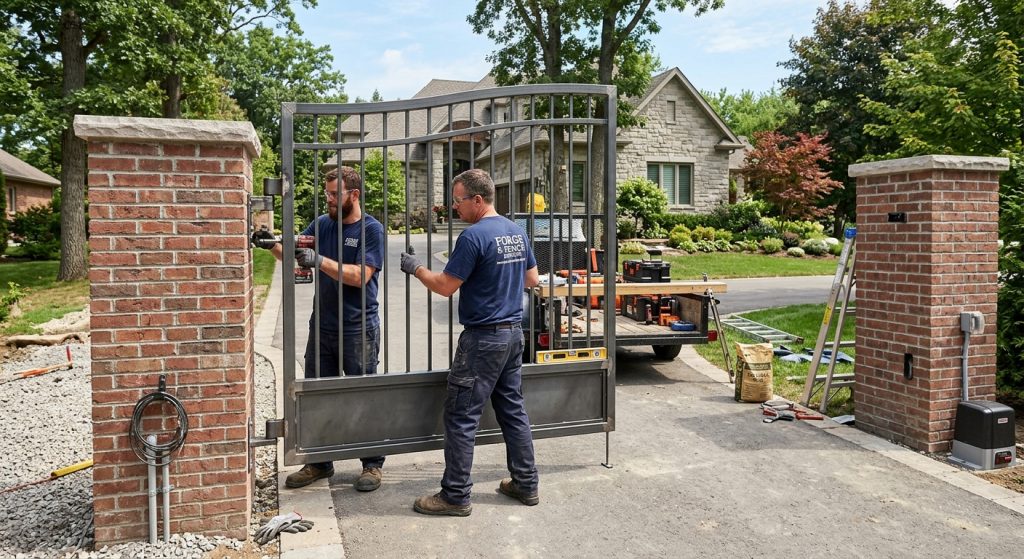
Gate posts carry the weight and movement of a gate, so their footing must resist shifting, frost, moisture, and repeated use. The right footing depth depends on soil conditions, gate dimensions, climate, and local construction requirements. Understanding these factors helps create a stable installation that stays aligned for years.
Depth
Gate post footing depth commonly reaches below the local frost line and often measures about one-third of the exposed post height. A minimum depth of 24 inches suits many installations, while heavier gates often require deeper foundations. However, these figures cannot replace local requirements or engineering guidance.
A deeper footing increases resistance against rotation and lateral movement. This advantage matters especially for wide gates, solid panels, and frequently used entrances. Such designs create greater leverage because wind and gate movement place additional force on the posts.
Gate geometry also affects the required foundation because hinge spacing changes how forces travel through each post. A tall, narrow gate may behave differently from a short, wide gate. Wind exposure deserves equal attention, especially for privacy gates with solid surfaces that catch strong gusts. Forces can gradually loosen surrounding soil and change alignment over time.
Conditions
Soil characteristics strongly influence footing performance. Dense, well-drained soil generally provides better support than loose, wet, or disturbed ground. Therefore, the same footing depth may perform differently across two properties.
Several conditions deserve attention before excavation:
-
Frost-prone soil can push concrete upward during seasonal freezing.
-
Poor drainage can soften surrounding soil and weaken lateral support.
-
Loose fill may require deeper or wider foundations for adequate stability.
-
Expansive clay can swell and shrink, creating movement around the footing.
Drainage also deserves consideration because standing water can affect soil stability. A gravel layer beneath the concrete can improve drainage where local conditions permit. The footing should also avoid creating a path that channels water toward vulnerable areas.
Dimensions
Post size and footing width work alongside depth to determine stability. A narrow footing may offer insufficient resistance even when excavation reaches an adequate depth. Conversely, excessive dimensions may waste materials without solving an underlying soil problem.
Heavy gates usually need stronger foundations because their hinges transmit substantial forces into the posts. Double gates also introduce different loads, particularly when both leaves move or meet near the center.
For this reason, footing dimensions should reflect the gate’s overall configuration. Consider the post height, gate width, material, hinge arrangement, wind exposure, and expected frequency of use.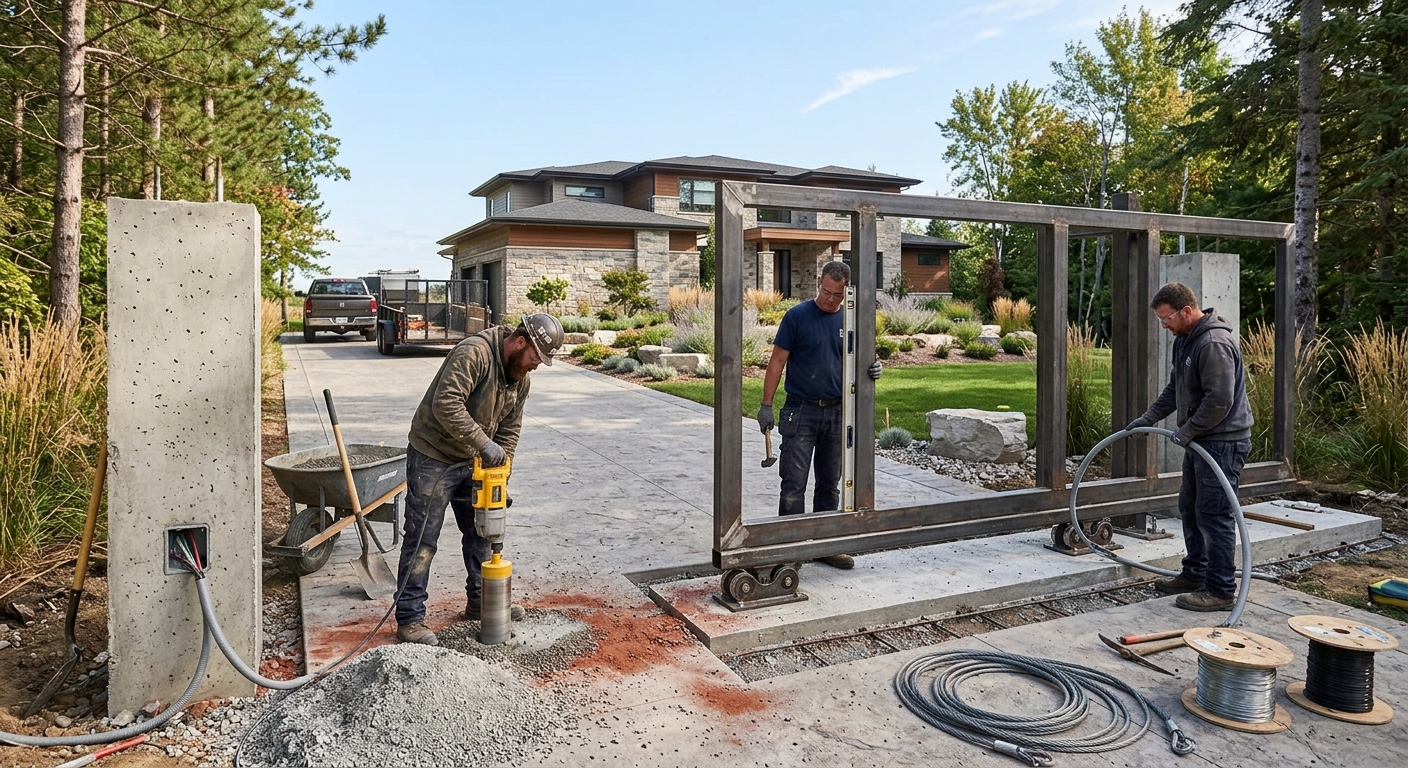
Installation
Proper installation helps the footing perform as intended. The excavation should reach firm, undisturbed soil whenever possible. The post should remain accurately aligned while concrete surrounds it and cures sufficiently.
Avoid relying solely on surface appearance when checking stability. A post can look vertical immediately after installation but shift later if the footing lacks adequate bearing or drainage.
Local building requirements may also specify minimum footing dimensions, concrete practices, or frost protection. These rules can vary significantly between regions, particularly where freeze-thaw cycles occur.
Maintenance
Even a well-designed footing benefits from periodic inspection. Movement often appears first through changes in gate alignment, uneven gaps, scraping, or difficulty with the latch.
Early signs deserve attention because continued movement can increase stress on hinges and connections. Correcting drainage problems and addressing soil erosion may prevent further deterioration.
A footing of around 24 inches often suits lighter gate installations, while heavier gates may need greater depth and width. Frost conditions, soil type, gate size, and drainage should guide the final dimensions rather than relying on one universal measurement. For reliable footing design and installation, consult a qualified fencing company familiar with local ground conditions and construction requirements.


