
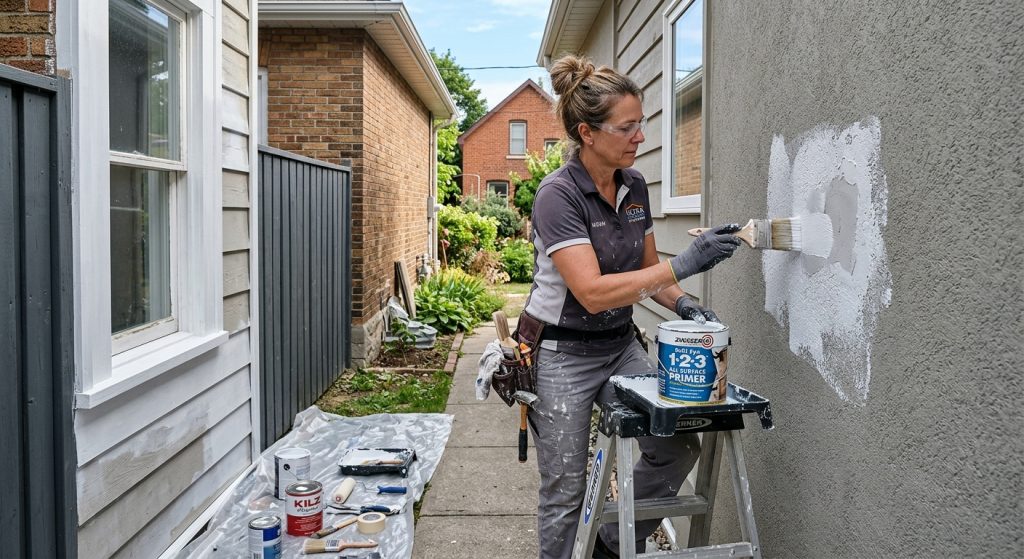
Primer choice is not a minor detail between sanding and painting: it helps determine whether a finish adheres, whether stains remain hidden, and whether colour looks even across the surface. The right product depends on what is being painted, its condition, the surrounding environment and the type of topcoat planned. A porous new wall, bare timber, smooth metal and a previously painted exterior each present different challenges, so one general-purpose can rarely answers every need.
Primer Selection: Why the Right Base Coat Matters
Primer performs several jobs that ordinary finish paint may not be designed to do. It can even out absorption, improve the bond between the surface and topcoat, and isolate contaminants that might otherwise show through. These functions are related but not interchangeable: a product that grips glossy paint is not automatically effective against smoke stains, and a stain sealer may not be the best choice for a slick plastic-like surface.
Absorbency is one of the easiest problems to overlook. New drywall, fresh filler and bare timber can draw liquid unevenly, leaving a finish with dull patches or visible differences in sheen. On a wall viewed in strong side light, those variations may appear more obvious than they did under work lighting. A suitable primer creates a more consistent foundation so the finish coat behaves predictably.
- Adhesion: it matters when the existing surface is smooth, glossy or coated with a different paint type. Paint applied directly to a poorly prepared surface may look sound at first, then lift or peel as it dries or as the room experiences ordinary wear. Cleaning, dulling a glossy finish with light sanding and applying a compatible bonding primer can improve the mechanical grip. The primer cannot compensate for loose, dirty or failing paint, which must be removed or repaired first.
- Stain control: it is a separate task. Water marks, smoke residue, wood tannins and other contaminants can migrate into a new coat, even when the finish paint appears opaque. A stain-blocking primer is designed to limit that bleed-through; for severe marks, shellac-based products are often selected, while other stains may call for an oil-based or specialist water-based sealer. The label should explicitly identify the problem it is intended to seal.
- Finish coats: primer choice can also influence their number and appearance. A sound, uniform base generally helps topcoat colour appear closer to its intended shade. A tinted primer, selected to complement a deep or saturated finish, may improve coverage, though it does not replace the recommended number of topcoats. In short, the best primer is the one matched to the surface’s actual condition and the paint system above it.
Before choosing a product, inspect for loose coatings, dust, grease, moisture and damage. This assessment leads naturally to the next decision: identifying which primer family is suited to the problem at hand.
Primer Types: Matching Formulation to the Job
| Primer type | Description | Best uses | Points of attention |
|---|---|---|---|
| Water-based | Dries faster than oil-based, water cleanup while wet, low-odour and low-VOC versions available | Interior work and many exterior applications | Choice depends on substrate, contaminant and topcoat |
| PVA drywall primer (water-based) | Seals porous paper and joint compound | Fresh, unpainted drywall | Not a universal primer; may adhere poorly on an already painted wall |
| Oil-based | Slower drying, solvent-based cleanup per product directions | Bare wood, certain metal surfaces, stains needing strong sealing; controls tannin bleed and seals grain on timber | Requires ventilation; may raise the grain, so sand lightly once dry |
| Shellac-based | Fast drying, forms an effective barrier | Localized stains such as smoke marks, water discoloration and bleeding knots | Fumes and cleanup call for ventilation and label compliance; not a default choice for every wall |
| Bonding primer | Targets difficult adhesion | Glossy or hard-to-coat surfaces, after cleaning and suitable abrasion | Not a substitute for a stain sealer |
| Stain-blocking primer | Blocks persistent stains and bleed-through | Persistent stains, tannin bleed | Must be rated for the specific contaminant |
| Rust-inhibiting primer | Protects ferrous metal | Bare steel | Suitable only for ferrous metal |
| Galvanized metal primer | Compatible with zinc-coated surfaces | Galvanized metal | Must be expressly labelled for galvanized surfaces |
| Masonry primer | Designed for porous mineral substrates | Concrete and other masonry | Select according to surface porosity, condition and moisture exposure |
No category replaces careful preparation before painting. The formulation is effective only when the substrate is clean, stable and within the temperature and moisture conditions specified on its label.

