Recognising these restumping warning signs can help distinguish routine wear from possible structural movement. Not every crack or uneven surface means the house needs restumping, but patterns of change deserve attention: supports that are visibly damaged, symptoms appearing in several rooms, or problems that worsen over time. A qualified restumping inspection can identify the cause and establish whether repairs, improved drainage, or replacement supports are needed.
Early floor changes that can signal failing stumps
Floors often reveal movement below a house before the subfloor supports can be seen. Uneven floors may feel sloped, dip in one area, or seem to shift underfoot. A ball rolling across the room can draw attention to a gradient, but the more useful clue is whether the floor has changed or several symptoms have appeared together.
Soft, springy or bouncing patches may indicate that supports are no longer carrying the load evenly. Squeaks and creaks can accompany this movement, although floorboards can also make noise for unrelated reasons. The distinction matters: a single noisy board is different from a wider area that feels unstable or has begun to sag.
Look for patterns rather than relying on one observation. Note which rooms are affected, whether the change is recent, and whether the same area has cracking or alignment problems. Avoid trying to level floors or adjust structural supports without professional guidance; an incorrect repair can conceal the underlying issue or transfer stress elsewhere.
Roofline and comfort changes that add to the evidence
A sagging or uneven roofline can be a visible sign that the building has settled unevenly, though roof framing, water damage, or earlier alterations may also be responsible. If the roof appears newly out of level and the floors or walls show related changes, the combination calls for prompt assessment. Structural movement may place additional strain on roofing and connections.
Gaps around doors and windows can allow outside air to enter, making rooms harder to keep comfortable. A rise in heating or cooling use is not proof of failing supports—weather, equipment condition, and energy habits also affect consumption—but it may reinforce other signs when drafts coincide with frame misalignment.
Use a simple record to make observations useful during an inspection. The following details can help a professional understand the timing and spread of the problem:
- Locations of sloping, soft, or sagging floors and whether the affected area is growing.
- Cracks, gaps, and door or window alignment changes, with dated photographs where possible.
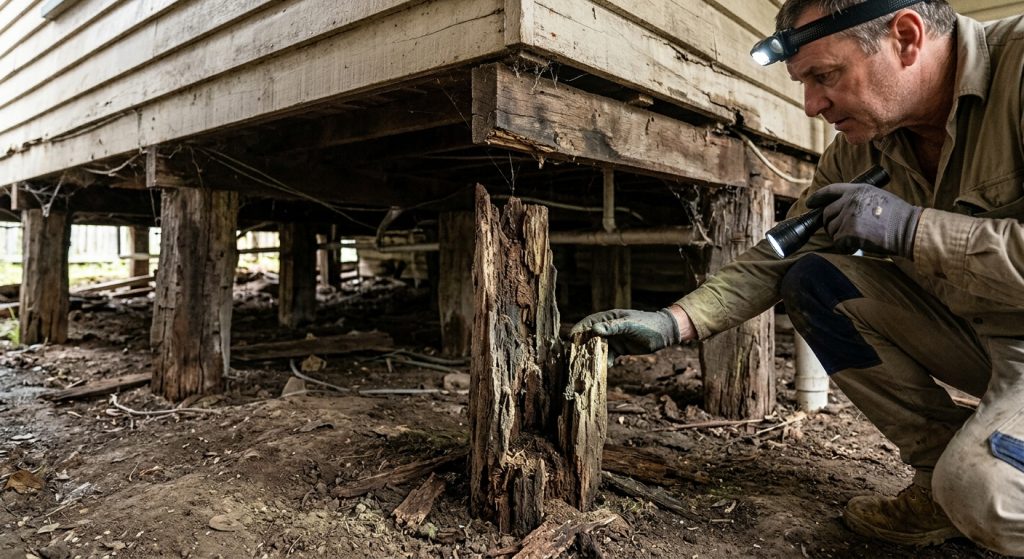
- Visible moisture, drainage issues, pest evidence, or damage to timber, metal, and concrete supports.
One symptom in isolation may have a straightforward explanation; several developing together provide a stronger reason to investigate.
Restumping inspection: when to seek professional advice
Arrange a restumping inspection when visible support damage appears, when floors feel increasingly unstable, or when cracks and frame problems are spreading. Seek prompt advice if a floor suddenly drops, a support seems displaced, or there are signs of substantial structural movement. If an area appears unsafe, keep people away until it has been assessed.
A qualified professional can examine the subfloor, stump condition, drainage, and the relationship between symptoms in different parts of the house. The assessment should establish whether the issue is related to the supports or another cause, and whether monitoring, maintenance, local repairs, or restumping is appropriate. Replacing supports is not automatically the right response to every sloping floor or crack.
| Observed sign | What it may indicate | Useful next step |
|---|---|---|
| Uneven or springy floors | Uneven support, floor damage, or movement | Record affected areas and arrange assessment if worsening |
| Cracks and sticking doors | Possible frame distortion or other building movement | Track changes and have related symptoms checked |
| Rot, rust, or termite evidence | Possible loss of support capacity | Seek structural and, where relevant, pest inspections |
| Damp subfloor or pooling water | Conditions that may contribute to stump damage | Investigate drainage and moisture sources |
Clear observations help the inspection focus on the cause, not just the most visible symptom. Early professional advice can clarify the level of risk and help prevent a developing support problem from becoming an urgent repair.